Build your hiking first-aid kit around the trails you actually hike, and you’ll have exactly what you need when an emergency hits.
Most pre-packaged kits cover the basics, but they skip the backcountry-specific gear that can save your life after a bad fall, a deep cut, or a run-in with wildlife.
Below, we’ll walk you through every item in your hiking first-aid kit (or backpacking first-aid kit, if you’re heading out for multiple days), from basic wound care to trauma supplies.
Why Every Hiker Needs a Hiking First-Aid Kit
If you spend enough time on trails, an injury will eventually happen.
Falls are the most common hiking injury, and they lead to scraped palms, twisted ankles, and sometimes even broken bones. Blisters sideline more hikers than people realize. Sprains, strains, allergic reactions, and dehydration round out the list of problems that can turn a good day on the trail into a miserable one.
Be ready for the injuries that are most likely to happen, and carry enough trauma gear to buy yourself time if a real emergency hits.
A Good Hiking First-Aid Kit Stops Problems Before They Start
Before you hit the trail:
- Grab a map and study the terrain.
- Know where water sources are, and bring a way to purify what you collect.
- Check the weather forecast and dress in layers appropriate for the season.
- Pack extra socks. Wet feet lead to blisters, and blisters lead to misery.
- Wear sturdy boots that fit. Good footwear helps prevent sprains and falls on rugged terrain.
- Tell someone where you’re going, what trail you’re on, and when you expect to be back. If you get hurt, someone who knows your itinerary can get help to you more quickly.
- Learn about the wildlife in your area, too, and have a plan for what you’ll do if you cross paths with them. Snakes, bears, and mountain lions all have different strategies for minimizing conflict and maximizing safety.
Adjust Your First-Aid Kit for the Season
The time of year changes what belongs in your pack. In cold weather, add hand warmers, an extra space blanket, and lip balm to prevent cracked skin. Frostbite and hypothermia are real threats above the tree line in winter, and having supplies to rewarm cold extremities matters.
In hot weather, pack extra electrolyte packets, sunscreen, and a sun hat. Heat exhaustion sneaks up fast at elevation, and dehydration makes every other injury harder to treat.
At high altitude (above 8,000 feet), consider carrying acetazolamide (Diamox) if your doctor recommends it, and bring ibuprofen for altitude headaches. Know the signs of altitude sickness: nausea, dizziness, and shortness of breath. The fix is simple: go lower.
What to Pack in Your Hiking First-Aid Kit
Anyone who has spent real time in the backcountry knows prep doesn’t guarantee safety. However, it does stack the deck in your favor.
Start with a pre-packaged first-aid kit as your base. It will likely include Band-Aids, adhesive tape, gauze, antiseptic wipes, antibiotic ointment, tweezers, and gloves. That’s a solid starting point, but it’s far from complete on its own.
Add these items to build a hiking first-aid kit worth carrying:
Moleskin. Band-Aids work for small cuts, but moleskin stays put on long, friction-heavy hikes. Apply it at the first sign of a hot spot, before a blister forms.
Pain relievers. Acetaminophen and ibuprofen handle headaches and muscle aches on the trail. A tube of pain-relieving cream or gel is a nice bonus for sore joints.
Antihistamines. Benadryl or a similar antihistamine can slow an allergic reaction when you’re miles from the nearest hospital. This is one of the most important items in any hiking first-aid kit, and most pre-packaged kits don’t include it.
Anti-diarrhea medication and electrolyte packets. Stomach issues in the backcountry aren’t just uncomfortable; they’re dehydrating and dangerous. Pack a few tablets and an electrolyte mix.
Sterile saline. A small bottle works as a wound wash, eyewash, or nose rinse. If you take a fall and grind dirt into a scrape, sterile saline flushes the debris out before you bandage. One bottle handles half a dozen jobs.
Hydrocortisone and anti-itch cream. Poison ivy, insect bites, and allergic rashes happen. If you brush through a stinging nettle patch or get chewed up by mosquitoes at camp, you’ll appreciate having treatment on hand.
A sewing kit. Thread, safety pins, and a needle can repair torn clothing, lance a blister safely, and serve as an improvised wound closure in a pinch. Safety pins can hold a triangular bandage in place as a sling if someone injures a shoulder.
Hand sanitizer. Clean your hands before treating a wound or eating a meal. In a survival situation, the alcohol content in hand sanitizer also makes it a reliable fire starter.

Trauma Gear: The Supplies Most Hiking First-Aid Kits Skip
Pre-packaged hiking first-aid kits aren’t built for real emergencies. They don’t include the gear you need after a bone fracture, deep laceration, or animal attack. If you want a hiking first-aid kit that can actually save a life, don’t skip trauma supplies.
A tourniquet is the single most important trauma item you can carry. The SOF Tactical Tourniquet is battle-tested and proven in the field. Buy from the manufacturer or a medical supplier, not a random seller online.
Carry two: one for you, and one for a hiking partner. In dire circumstances, two is one, and one is none.
Hemostatic gauze (like QuikClot) stops heavy bleeding fast. Soldiers carry it for traumatic injuries, and it works just as well on the trail. Pack it directly into a deep wound and apply firm pressure to stop bleeding.
Compression bandages and gauze (like MiniTAC Wrapping Gauze) can treat most moderate wounds. For a wound that’s bleeding steadily but not gushing, wrap the injury with gauze, then apply a compression bandage over the top to maintain pressure.
A nasopharyngeal airway (a “nose hose”) can open an airway during a severe allergic reaction, buying time until an EpiPen kicks in or medical help arrives.
Chest seals (like HyFin Vents) cover puncture wounds to the chest. If someone falls onto a sharp branch and the wound makes a sucking sound with each breath, that’s air entering the chest cavity. A chest seal covers the hole and lets the lungs function again.
A space blanket (or two) does more than keep you warm. If a hiking partner goes into shock after an injury, wrap them in a space blanket to maintain body heat. You can fold one into a makeshift sling, use it as ground cover when treating a patient, use it to build a rainproof shelter, or hold it up to signal a rescue helicopter.
Why a Knife Belongs in Your Hiking First-Aid Kit
Every hiking first-aid kit needs a reliable knife.
A first-aid blade lets you cut medical tape and gauze to size, slice clothing away from a wound without jostling the injured area, and trim moleskin into the exact shape you need for a blister. When injuries get more serious, use it to split a branch or a trekking pole for a splint, or strip paracord and fabric into makeshift sling material.
If the situation turns dire, a knife helps you build an emergency shelter or process firewood to keep a hypothermic patient warm.
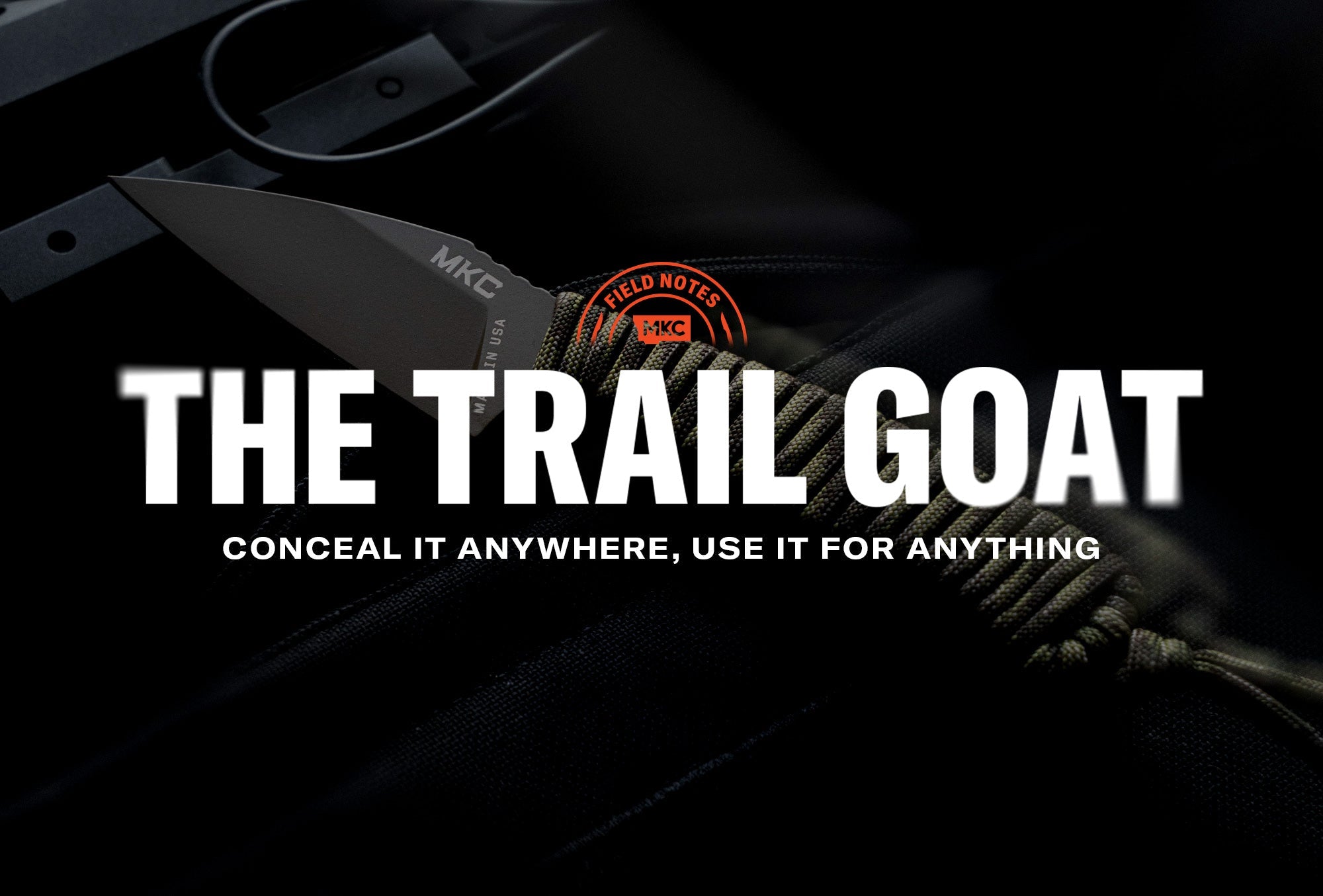
We built the Mini Speedgoat 2.0 for exactly this kind of work. At just 1.18 ounces with a 3-inch MagnaCut stainless steel blade and a 6 3/4-inch overall length, it practically disappears in your pack.
The paracord-wrapped handle gives you a solid grip in wet conditions and doubles as emergency cordage if needed. It’s the lightest fixed blade we make, and it’s legal for open carry in most U.S. cities.
If you want a slightly bigger blade, the Speedgoat 2.0 has a 3 3/4-inch blade at 1.76 ounces, still lighter than a granola bar.
Day Hiking First-Aid Kit vs. Backpacking First-Aid Kit
Your hiking first-aid kit needs to match the trip you’re taking. A four-mile loop near a parking lot doesn’t need the same kit as a week in the Wind River Range.
For a day hike close to a trailhead, keep it simple: basic wound care, moleskin, pain relievers, antihistamines, hand sanitizer, a space blanket, and a knife. Pack it all in a quart-sized ziplock bag and toss it in the top of your pack. The whole kit weighs four to eight ounces.
For a multi-day backpacking trip (two to four nights), your backpacking first-aid kit needs more firepower. Add trauma supplies (tourniquet, hemostatic gauze, chest seal, compression bandages), a nasopharyngeal airway, prescription medications, extra pain relievers, anti-diarrhea tablets, electrolyte packets, and a satellite communicator like the Garmin inReach.
The farther you are from help, the more self-sufficient your backpacking first-aid kit needs to be.
For remote backcountry and wilderness trips (five-plus days, far from trailheads), add a second tourniquet, a SAM splint or enough supplies to improvise one, extra hemostatic gauze, a broader medication supply (including altitude meds if you’re going high), water purification tablets, and a wilderness first aid reference card.
At this level, build your backpacking first-aid kit around the MARCH protocol:
- Massive hemorrhage
- Airway
- Respiration
- Circulation
- Hypothermia
Those are the injuries that end a life fastest, in that order.
Keep Your Backpacking First-Aid Kit Organized and Ready to Go
You can’t treat an injury if you can’t find your supplies.
Use small resealable bags to group items by type: wound care in one bag, medications in another, trauma supplies in a third. Label each bag. Keep the whole kit in a waterproof dry sack or a brightly colored stuff sack near the top of your pack, where you can grab it quickly.
Check your backpacking first-aid kit before every season. Replace every item you used on the last trip. Toss expired medications and ointments. Restock supplies and charge your communication devices.
If your backpacking first-aid kit has sat in your gear closet for a year, it needs attention.
Learn How to Use Your Hiking First-Aid Kit
You can’t save a life with a tourniquet in your hiking first-aid kit if you don’t know how to apply one. A chest seal won’t help if you’ve never practiced with it.
Before your next trip, take a wilderness first aid course. The American Red Cross, NOLS, and the Wilderness Medicine Training Center all run two- and three-day courses that teach wound packing, splinting, patient assessment, and evacuation decision-making. These skills matter more than the supplies in your pack.
At minimum, take a Stop the Bleed course. It takes about an hour and teaches you how to control life-threatening bleeding with a tourniquet and wound packing.
Frequently Asked Questions About Hiking First-Aid Kits
How much does a hiking first-aid kit weigh?
A solid day-hiking first-aid kit weighs between four and eight ounces. A full backpacking first-aid kit with trauma supplies typically weighs 12–16 ounces. Cut weight by repackaging medications into smaller containers and by carrying travel-sized ointment tubes.
Is it better to buy a pre-made hiking first-aid kit or build my own?
Start with a pre-made hiking first-aid kit (Adventure Medical Kits makes solid options for hikers) and then add the items it’s missing: moleskin, antihistamines, trauma supplies, and a knife. A hybrid approach gives you convenience and coverage.
How often do I need to check my hiking first-aid kit?
Check it at least once per season. Medications expire, adhesive tape loses its stick, and supplies run out. Do a full inventory before your first trip of the year.
Do I need a tourniquet for my backpacking first-aid kit?
Yes. A severe cut from a fall or a sharp rock can cause life-threatening bleeding. A tourniquet buys you critical time to get help. Carry one on day hikes and two on longer trips.
What’s the best knife to carry in a hiking first-aid kit?
You want a blade that’s lightweight, compact, and easy to use with one hand. Our Mini Speedgoat 2.0 weighs 1.18 ounces, features a corrosion-resistant MagnaCut stainless steel blade, and comes with a Kydex sheath. We built it for compact situations like being packed into a hiking or backpacking first-aid kit.
What’s the difference between a hiking first-aid kit and a backpacking first-aid kit?
A hiking first-aid kit for day trips prioritizes lightweight basics: wound care, pain relievers, and antihistamines. A backpacking first-aid kit adds trauma supplies, extra medications, and emergency communication gear for trips where help could be a full day or more away.
by Josh Smith, Master Bladesmith and Founder of Montana Knife Company