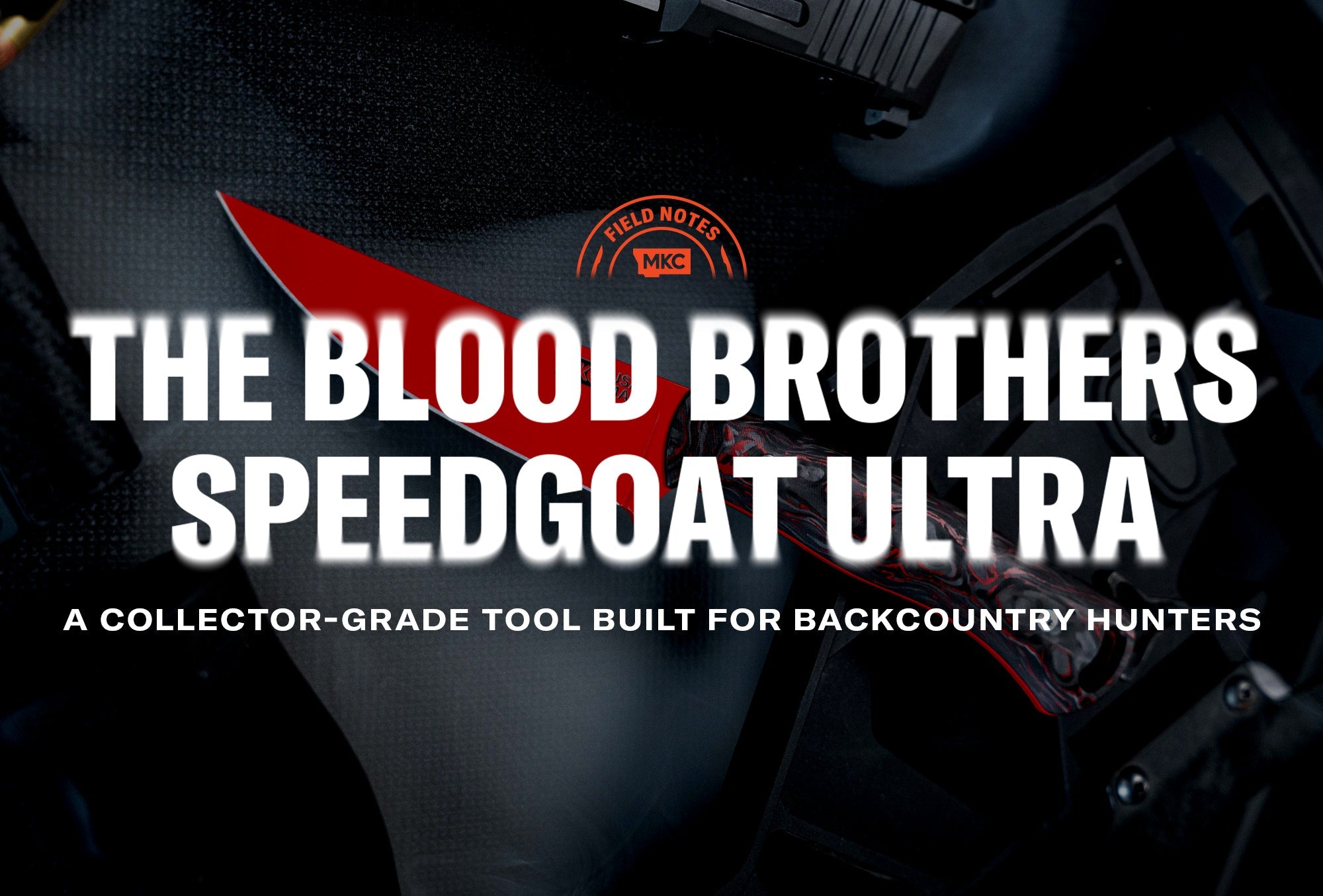
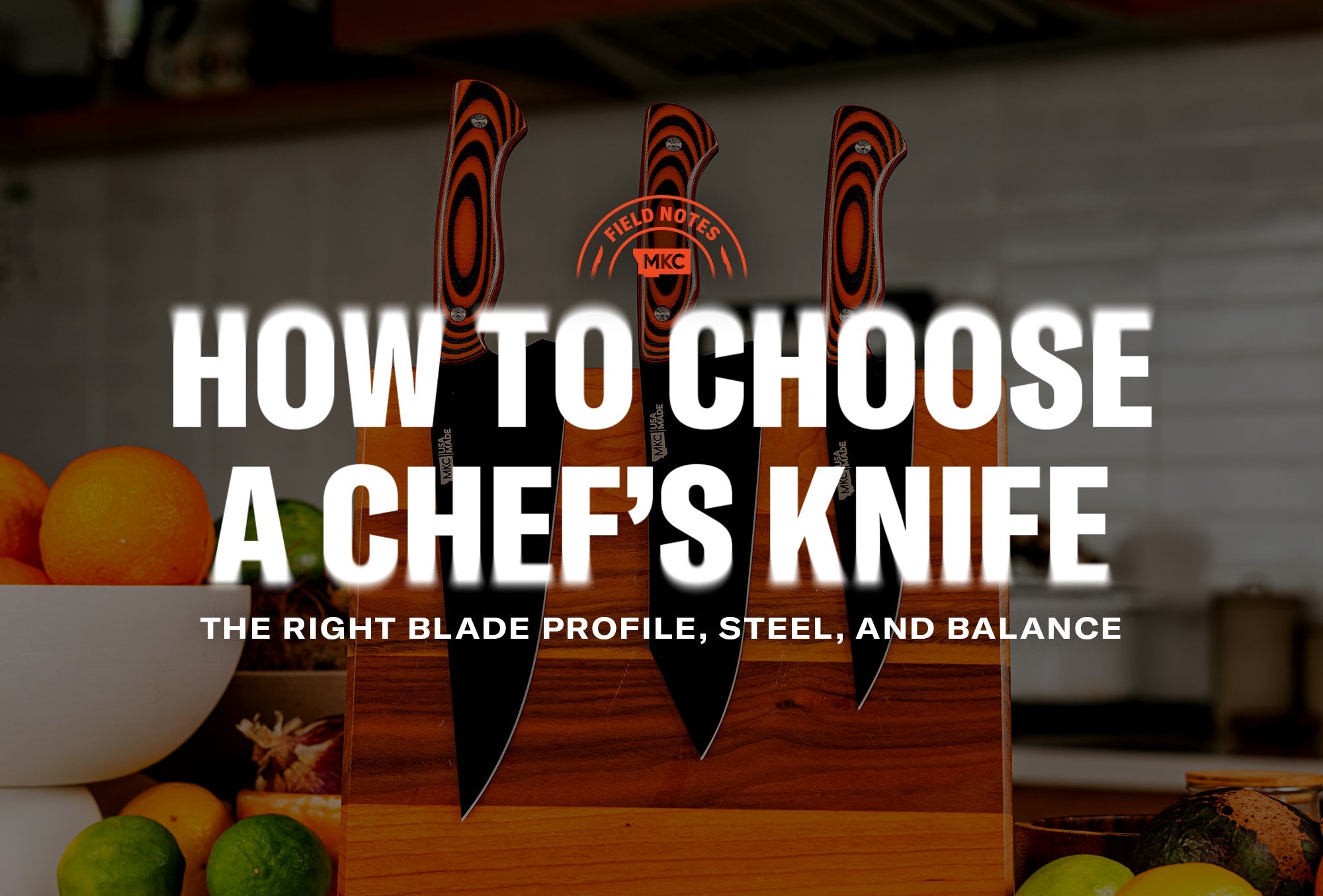
The hallmarks of a fixed blade knife are superior strength, reliability, and instant deployment, with no moving parts that can fail.
Whether you’re field dressing an elk, building a camp shelter, or opening packages at home, a fixed blade knife handles the job. The key to finding the best fixed blade knife is matching the blade size and design to your use case.
This definitive guide contains all the information you need about fixed blade knives: why they outperform folders, how to choose the right size, what tang construction means for durability, and how to carry them legally and comfortably.
Fixed Blade Knives vs. Folding Knives: Why Fixed Blades Win
The difference between a fixed blade knife and a folding knife comes down to one functional distinction: a folding knife folds by design, which creates a weak point at the pivot, while a fixed blade knife is one continuous piece of steel from tip to handle, with no hinges, locks, or mechanisms that can fail.
|
Feature |
Fixed Blade |
Folding Knife |
|
Strength |
No weak points; handles heavy tasks |
Pivot can fail under lateral stress |
|
Deployment |
Instant; draw and cut |
Requires opening; may need two hands |
|
Maintenance |
Simple; no moving parts to clean |
Hinges collect debris and need lubrication |
|
Durability |
Withstands batoning, prying, hard use |
Limited by lock and pivot strength |
|
Carry |
Requires sheath; visible |
Pockets easily; more discreet |
Fixed blade knives don’t have moving parts that can break, jam, or collect lint. Here at MKC, we’ve seen folding knives fail when owners need them most. A fixed blade knife clipped to your belt or pack is ready the moment you reach for it.
One of our knife owners recently told us he used his fixed blade knife in the Bob Marshall Wilderness to cut a saddle free when a horse rolled over on his friend. In moments like that, you don’t have time to fumble with a folding mechanism.

Fixed Blade Use Cases: Matching the Blade to the Task
Fixed blade knives excel across many applications, but different tasks call for different blade profiles and sizes.
Hunting
Hunters need fixed blade knives for field dressing, skinning, and quartering game. The work is bloody, slippery, and often happens in cold conditions. A fixed blade knife with a comfortable handle and easy-to-clean design makes the difference between a quick job and a frustrating one.
Drop point and skinning blades dominate this category, with blade lengths from 3–5 inches covering most game from whitetail to elk.
Survival and Bushcraft
Survival knives need to do it all: baton thick wood, carve fire sticks, process game, build shelters, etc. These tasks demand thicker spines (0.15 inches or more) and longer blades (5 to 7 inches) that can take a beating.
Full tang construction is non-negotiable here. Our Marshall Bushcraft sports a 7 5/8-inch blade at 0.17 inches thick for exactly this kind of work.
Tactical
Military and law enforcement personnel need fixed blade knives that deploy instantly and perform under stress. A knife buried in a pocket or requiring two hands to open can cost precious seconds.
Tactical fixed blades typically feature aggressive blade profiles, non-reflective finishes, and attachment systems compatible with MOLLE gear and plate carriers.
Everyday Carry
Many people assume fixed blade knives are too big for daily carry. That’s where compact fixed blade knives change the equation.
Our Mini Speedgoat 2.0 weighs just 1.18 ounces, is lighter than most folding knives, and clips onto a belt, pack strap, or even the waistband of workout clothes. The 3-inch blade also falls within most jurisdictions’ blade-length limits, making it legal to carry in places with stricter knife laws. It opens boxes, cuts rope, and handles daily tasks with dependable reliability.
Camp and Utility
General camp knives bridge the gap between specialized hunting blades and heavy survival knives. A 4–5-inch blade handles food prep, field dressing, carving, light batoning, and the random tasks that come up around camp.
The Blackfoot 2.0 and Whitetail fill this role well.
Size Guide: Compact, Medium, and Large Fixed Blade Knives
Blade length determines what tasks a fixed blade knife handles well.
Compact EDC (3–4 Inches)
Small fixed blades work for everyday carry, detail work, and backup blades. They’re light enough to forget you’re carrying them until you need them.
Our Mini Speedgoat 2.0 and Badrock fit this category. These knives handle daily cutting tasks and work as secondary blades for hunters who want a smaller knife for precision cuts.
Medium Utility (4–6 Inches)
This is the sweet spot for most hunters and outdoor users. A 4–5-inch blade has enough steel to field dress deer and elk, but stays maneuverable for detailed work.
Our Blackfoot 2.0, Whitetail, and Jackstone all land in this range. These knives handle 90% of hunting and camping tasks without feeling oversized.
Large Survival and Hunting (6–8 Inches)
Big blades handle big jobs. Batoning firewood, processing large game, chopping, and heavy camp tasks call for longer, thicker blades.
The Super Cub and Marshall Bushcraft have the mass and edge length necessary for demanding work. These are purpose-built tools, not everyday carry options.
Fixed Blade Tang Construction: What’s Inside the Handle
The tang is the portion of the blade that extends into the handle. It determines how strong your fixed blade knife really is.
Full Tang
A full tang runs the handle’s entire length and width, with handle scales on either side. This is the strongest construction method. The blade and handle are one continuous piece of steel, which distributes stress evenly and eliminates weak points.
Every MKC fixed blade knife uses full tang construction.
Partial Tang
Partial tangs extend only partway into the handle. They reduce weight and cost, but they create a weak point where the tang ends.
Under heavy stress, partial-tang knives can snap or separate from the handle. Modern adhesives have improved partial tang durability, but they still can’t match the strength of full tangs for hard use.
Hidden and Rat-Tail Tangs
The handle fully encases hidden tangs, making them invisible from the outside, while rat-tail tangs narrow dramatically from the blade, resembling a thin rod.
Both designs work for light-duty knives but fail under the demands of hunting, survival, or heavy outdoor use.
Fixed Blade Knife Sheath Types and Carry Methods
A fixed blade knife needs a sheath. The sheath protects the blade, protects you, and determines how you carry the knife.
Kydex
Kydex is a thermoplastic that molds precisely to the blade. It has excellent retention, cleans easily, and handles moisture, blood, and temperature swings without degrading.
All MKC knives ship with custom Kydex sheaths that clip onto belts, pack straps, and MOLLE webbing. You can carry them vertically, horizontally, or scout style depending on your preference.
Leather
Leather sheaths look classic and feel comfortable against the body. They’re quieter than Kydex when moving through brush. The trade-off is maintenance: leather absorbs moisture and needs conditioning to prevent mold and deterioration.
We carry leather sheaths in our Traditions line for owners who prefer that aesthetic.
Carry Positions
Fixed blades can ride on your hip, on your belt at 11 o’clock, horizontally across your back, or on a pack strap for quick access. Experiment with positions to find what works for your body and your typical activities.
Hunters often prefer a belt carry that keeps the knife accessible when kneeling over game. Backpackers might want a shoulder strap mount.
Legal Considerations
Knife laws vary by state, county, and even city. Most jurisdictions regulate fixed blade knives more strictly than folders, often setting blade-length limits (commonly 3–4 inches for concealed carry) or requiring open carry. Some areas prohibit fixed blade carry entirely in certain contexts.
Before carrying a fixed blade knife, research your local laws, and when traveling, check the laws at your destination. What’s legal in Montana may not be legal in California or New York.
Fixed Blade Knife Maintenance: Simple by Design
Fixed blade knives are easier to maintain than folders. They have no pivot to lubricate, no liner lock to clean, and no lint trap inside the handle. After use, wash the blade with warm, soapy water, dry it completely, and apply a light coat of blade wax or oil.
For carbon steel, regular waxing prevents rust and helps a protective patina develop. Stainless options like MagnaCut are more forgiving, but even stainless steel benefits from proper care.
And if your edge needs more than a touch-up, send it back to us. Our MKC Generations® program includes free resharpening for the life of the knife, even if it outlasts yours.
A Brief History of Fixed Blade Design
Humans have carried fixed blade knives for thousands of years. Over time, stone blades gave way to bronze, then iron, then steel. Each material brought improvements in edge retention and durability, but the design remained the same: a blade attached to a handle.
The folding knife is a relatively recent development, designed for convenience in urban environments where carrying a visible blade became socially awkward or legally complicated. But in the field, where reliability matters more than concealment, fixed blades remain the tool of choice.
Modern metallurgy has taken fixed blade performance to new levels. Steels like MagnaCut combine edge retention with corrosion resistance in ways that weren’t possible a decade ago. The fixed blade knife you carry today outperforms any blade available to hunters and soldiers throughout most of human history.
Find the Right Fixed Blade Knife for You
The best fixed blade knife is the one that fits your hand, matches your tasks, and travels with you when you need it. A compact EDC fixed blade works for daily carry. A medium hunting knife handles most game. A large bushcraft blade tackles survival tasks.
Every MKC fixed blade knife uses full tang construction, premium steel, and thoughtful ergonomics. Pick the size that matches your work, and it’ll serve you for generations.
by Josh Smith, Master Bladesmith and Founder of Montana Knife Company